Most people with persistent back pain have already done the obvious things. They rested. They stretched. Maybe they went through a round of PT that helped for a while and then stopped working. The pain came back, sometimes worse, sometimes in a new pattern, and now they are trying to figure out why nothing has stuck.
The answer is rarely structural damage. What we see consistently is a back that was asked to do more than it was prepared to handle, and then never fully rebuilt its capacity to handle it again. Back pain that keeps returning is almost always a load and movement problem, not a tissue problem. And that distinction changes everything about how you treat it.
At Next Level Physio, back pain treatment starts with a question most clinics never ask: what do you actually want to get back to? Your training, your runs, your lifting, your life without spending it managing symptoms. We build every plan around that answer.
Ready to find out what's actually driving your back pain?
Book a Back Pain Evaluation at nlphysio.com | Woodcliff Lake | Montclair
"At my first visit to Next Level, I could not stand straight, sit or walk without pain. Dr. Yoo performed a thorough evaluation, asked questions about my goals for PT and explained their methods of treatment. My goals were to be pain free and return to the activities I loved: golf, pickleball and yoga. Within 5 weeks I was playing golf again and after 8 weeks, I was back to all activities, feeling healthier and stronger than I have in years."
— Dave M. | Google Review
Why Your Back Pain Keeps Coming Back
Recurring back pain almost never comes from a single incident. Even when there is a clear mechanism, a lift that went wrong or a run that ended badly, the episode usually reflects a capacity problem that was building quietly for weeks or months beforehand.
These are the most common drivers we see:
- Load intolerance mismatches. Your training, mileage, or lifting demands exceeded what your back could tolerate at that point in time. This is not a structural problem. It is a preparation and progression problem.
- Movement compensation patterns. When one area of the body is weak or restricted, adjacent structures compensate. The lumbar spine is a common compensation site for limited hip mobility, weak glutes, or stiff thoracic extension. Treating the back without addressing the compensation source leads to temporary relief and predictable recurrence.
- Core and hip strength deficits. The lumbar spine needs the surrounding musculature to share load effectively. When that system is undertrained, the spine absorbs more force per movement than it should. Over time, that adds up.
- Deconditioning cycles. Pain leads to rest. Rest reduces tissue tolerance. Reduced tolerance makes it easier to re-aggravate at lower loads. Without a progressive return-to-load strategy, this cycle continues indefinitely.
- Incomplete prior rehab. Many people stop treatment when symptoms resolve, before the underlying capacity has been fully rebuilt. Feeling better and being structurally ready to return to full training are not the same milestone.
| The core principle
Back pain is not solved by reducing what your back is asked to do. It is solved by progressively building what your back is capable of doing. Protection and avoidance buy time. Load and capacity building create the permanent change. |
Types of Back Pain We Treat
Back pain is not one condition. Different structures, different mechanisms, and different patient profiles call for different treatment approaches. We assess each presentation individually and build a plan around what is actually driving your symptoms, not a generic low back pain protocol.
Mechanical Low Back Pain
Sports, muscle and golf, man with back pain during game on course, massage and relief in health and wellness. Green, hands on injury in support and golfer with body ache at golfing workout on grass
Mechanical low back pain is the most common presentation we see. It is pain that behaves predictably in response to specific movements or positions: bending, twisting, lifting, prolonged sitting, or extended standing. It is typically localized to the low back, without radiation into the leg.
This includes gym-related back strain, postural overload from desk work, and pain that flares with training load and resolves with rest but keeps returning. The pattern itself tells us a great deal about which structures are involved and how to load around them during recovery.
Who this affects: Runners increasing mileage, lifters returning to heavy training, office workers with sedentary daily patterns, and active adults managing recurring flare-ups
What makes it persist: Insufficient posterior chain strength, poor load management, and returning to full activity before the back has rebuilt its tolerance
Sciatica and Nerve-Related Back Pain
Sciatica describes symptoms that originate in the lumbar spine and travel along the path of the sciatic nerve, typically through the glute and down the back of the leg, sometimes into the foot. It is a symptom pattern, not a diagnosis in itself. The underlying driver matters enormously for how it is treated.
Neural irritation responds very differently to treatment than neural compression. Nerve pain that is provoked by movement is different from nerve pain that is constant. A thorough clinical assessment is what determines which presentation you have and what progression is appropriate.
Common symptoms: Burning, shooting, or electrical pain down the leg; numbness or tingling in the foot or calf; pain that is worse with sitting or flexed postures
What we assess: Neural tension, lumbar mobility, disc and nerve root involvement, movement provocation patterns, and load tolerance
Key distinction: Fear of movement is common with sciatica and almost always works against recovery. Graded, progressive movement is a core part of how this condition resolves.
Disc-Related Back Pain
A disc herniation or bulge is one of the most misunderstood diagnoses in back pain. Imaging findings are frequently used to explain pain, but the relationship between what appears on an MRI and what a patient actually experiences is much more complicated than most people realize.
Research consistently shows that disc herniations, bulges, and degenerative changes are present on MRI in large percentages of people with no pain at all. What matters clinically is not what the image shows, but how the patient moves, what provokes symptoms, and how the nervous system is responding. Treatment built around imaging findings alone is often both unnecessary and ineffective.
What this includes: Lumbar disc herniation, disc bulge, degenerative disc disease, and related nerve root irritation
Our approach: Restore movement confidence, address neural sensitivity, build posterior chain and trunk capacity progressively, and guide return to full loading without avoidance
SI Joint Pain
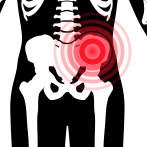
Sacroiliac joint dysfunction is a common source of one-sided low back and hip pain that is frequently misidentified as lumbar disc pain or hip pathology. It tends to present as deep, localized pain at the base of the spine on one side, sometimes with referral into the glute or upper thigh, and it is often aggravated by transitional movements: standing from sitting, rolling in bed, climbing stairs, or single-leg loading.
SI joint presentations respond very well to a combination of manual therapy and targeted stability training focused on load control through the pelvis and hip complex. The goal is not to immobilize the joint. It is to rebuild the capacity to control it under the demands of daily activity and training.
Who this affects: Runners, postpartum athletes, lifters who favor one side, and people who have always been told they are hypermobile or too flexible
What drives it: Hip mobility limitations, glute strength deficits, pelvis stability under single-leg load, and rapid changes in training volume or surface
Why Rest Alone Does Not Fix Back Pain
Rest is appropriate in the acute phase of a back injury, when tissue is irritated and movement provokes significant pain. But rest as a long-term strategy actively works against recovery.
Here is why. Tissue tolerance is maintained through use. When you reduce what your back is asked to do, its tolerance decreases proportionally. The same movement or load that was manageable before the injury can trigger a flare after extended rest, not because the structure is weaker, but because its exposure has been reduced.
This is the deconditioning cycle that keeps so many back pain patients stuck. Pain leads to rest. Rest reduces tolerance. Reduced tolerance leads to re-injury at lower thresholds. Without a structured return-to-load program, this pattern repeats indefinitely.
- What rest does well: Reduces acute tissue irritation, gives the nervous system time to settle, buys a window for the inflammatory response to calm
- What rest does not do: Rebuild posterior chain strength, improve load tolerance, address movement compensation patterns, or prevent the next episode
| The research position on back pain and movement
Current clinical evidence is clear that guided movement and progressive loading are the most effective long-term treatments for low back pain. Passive approaches and extended rest produce temporary relief at best. Active rehabilitation produces durable change. |
How We Assess Back Pain at Next Level Physio
Our assessment is not a standard intake questionnaire. It is a full clinical picture of how you move, what you can load, what provokes your symptoms, and what is required for you to get back to the training and activity you care about.
Movement and Strength Testing
We evaluate how you move through fundamental patterns: hinge, squat, carry, rotation. We look for compensation, asymmetry, and load intolerance that a standard pain-focused assessment would miss. This tells us not just where you hurt, but why.
Load Capacity Evaluation
For runners and lifters, we assess load tolerance specific to your sport. How does your back respond to running volume? Where does it break down under a deadlift or squat? Understanding the demand-to-capacity gap is essential for building a realistic return-to-training timeline.
Running Gait and Mechanics Analysis
For runners with back pain, we incorporate a running gait analysis to identify mechanical contributors at the foot, hip, and pelvis. Back pain in runners is frequently downstream of mechanics that have nothing to do with the back itself.
Return-to-Performance Benchmarks
We define specific, objective benchmarks for your return to training. Not just 'pain-free.' Loaded, moving well, and able to handle the full demand of your sport or activity without compensation or fear.
Our Treatment Approach: Performance-Based Rehab
Next Level Physio is not a traditional PT clinic built around pain relief and passive treatment. We are a performance rehab practice built around capacity building, progressive loading, and return to training.
In practical terms, every session at Next Level is built on the same foundation:
Active rehabilitation over passive treatment. Manual therapy and hands-on techniques are used to restore range of motion and reduce acute sensitivity so that you can participate in the active work. They are not the destination. Movement is.
Progressive loading from the beginning. We introduce load early, at appropriate doses, using the 24-hour response to guide progression. The goal is to restore tissue tolerance, not protect you from it.
Posterior chain and trunk capacity rebuilding. Glute strength, hip mobility, trunk stiffness, and load transfer through the posterior chain are the structural foundation of a back that holds up over time. These are not optional additions to treatment. They are the treatment.
Return-to-sport and return-to-training focus. Every treatment plan is built around a specific return target. What do you want to get back to, at what level, and by when? That goal drives the program from the first session.
Data-informed progression. We track how you respond to load over time and adjust accordingly. Symptom monitoring, strength benchmarks, and movement quality assessments inform every progression decision.
Services that support back pain treatment at Next Level Physio:
Therapeutic Exercise | The foundation of every back pain program
Shockwave Therapy | Used for chronic pain presentations and tissue sensitization
Blood Flow Restriction Training | Early-phase strength building at lower loads
Hands-on Methods | Manual therapy for mobility and acute symptom management
Running Gait Analysis | For runners whose back pain has a mechanical component
When Imaging Helps (and When It Does Not)
MRI and X-ray have an important place in back pain management. They also get misused in ways that delay recovery and unnecessarily increase patient fear.
Imaging is genuinely useful when there are neurological symptoms that are worsening rather than improving, when red flags are present, or when surgical planning is being considered. In those situations, structural information changes clinical decision-making.
What imaging cannot do is tell you how much pain a person will have, how long recovery will take, or whether someone is a good candidate for conservative rehab. Studies consistently show that disc herniations, degenerative changes, and structural abnormalities are found on MRI in high percentages of completely asymptomatic people. The same finding that produces severe pain in one patient produces no symptoms in another.
| The clinical evidence on imaging and back pain
Structural findings on MRI do not reliably predict pain severity, functional limitation, or treatment outcome. Decisions about treatment should be based on the clinical presentation, not the image. Over-reliance on imaging findings leads to fear, avoidance, and in some cases, unnecessary intervention. |
We use imaging when it changes clinical management. We do not use it to explain pain or establish limits on what a patient is capable of doing.
Related Back Conditions
Sciatica and Nerve Pain: Radiating leg pain, nerve irritation, disc involvement. Covers the full clinical picture of sciatic presentations and what a graded return to movement looks like.
Facet Joint Syndrome: Extension and rotation pain, morning stiffness, movement-provoked symptoms. Frequently seen in older athletes and those returning to loading after a period of reduced activity.
Degenerative Disc Disease: Disc-related back pain, discogenic symptoms, and the distinction between imaging findings and actual functional limitation.
Lumbar Spinal Stenosis: Narrowing of the spinal canal with neurogenic claudication patterns. Common in adults over 50, particularly those with activity-limiting symptoms.
Post-Op Spinal Fusion: Return to function and loading after spinal surgery. Structured rehab progression with surgical team coordination.
Go Deeper: Back Pain, Lifting, and What Recovery Actually Looks Like
Written by Dr. Jerry Yoo from clinical experience and his own recovery. These are the conversations we have every day in the clinic:
Should You Stop Deadlifting After a Back Tweak? | nlphysio.com/deadlifting-after-back-tweak/
How to Know You're Ready to Return to Lifting After Injury | nlphysio.com/return-to-lifting-after-injury/
The Day I Thought My Career Was Over: What a Disc Herniation Taught Me About Beating Sciatica for Good | nlphysio.com/disc-herniation-beating-sciatica-for-good/
Stop Managing Your Back Pain. Start Solving It.
If you have been stretching, resting, and waiting for your back to sort itself out, and it keeps not sorting itself out, you do not have a patience problem. You have an unanswered clinical question.
A back pain evaluation at Next Level Physio gives you a full picture of how you move, what your back can actually handle, and exactly what it is going to take to get you back to training without bracing for the next flare. A real plan. A real timeline. Built around you.
We work with runners, lifters, hybrid athletes, and active adults across New Jersey. People who are not ready to scale back, and should not have to.
Woodcliff Lake, NJ | Montclair, NJ