Dr. Jerry Yoo. Founder and Running Specialist. Next Level Physio
5 minute read

Foam Rolling Feels Good. It Doesn't Fix the Problem.
Foam rolling isn't useless, and if you're dealing with IT band pain, it's worth doing right. But it's also not the fix most runners think it is. Here's the proper technique first, and exactly why it still won't solve the problem on its own.
How to Foam Roll the IT Band (The Right Way)
Most runners doing this are doing it wrong, which only adds to the frustration.
Positioning: Lie on your side with the foam roller placed just below your hip, outer thigh resting on top of it. Prop yourself up on your forearm, stack your top leg in front for balance, and keep your bottom leg extended.
Rolling speed: Roll slowly, about an inch per second, from just below the hip down toward the knee. Fast rolling doesn't give the tissue time to respond and mostly just skates over the surface. This is the mistake Dr. Yoo sees most often in the clinic: runners aggressively sawing back and forth for 30 seconds and wondering why nothing changes.
Tender spots: When you hit a spot that feels notably more sensitive than the rest, pause and hold there for 20 to 30 seconds rather than rolling straight through it. That pause is doing more than the rolling motion itself.
Frequency: 1 to 2 minutes per side, 3 to 4 times per week, is plenty. More isn't better here. Dr. Yoo regularly sees runners rolling the same irritated IT band daily, sometimes twice a day, convinced that more pressure means more progress. It doesn't. It just keeps the tissue inflamed and delays the actual fix.
Choosing a foam roller: A medium-density foam roller is the right starting point for most runners, firm enough to apply real pressure, forgiving enough not to cause bruising. High-density or textured rollers get recommended online constantly, but for an already-irritated IT band, that extra intensity usually does more harm than good.
Done this way, foam rolling can genuinely take the edge off before a run. What it can't do is change the tissue that's actually causing the pain, and that's worth understanding next.

Why Foam Rolling Isn't Enough for IT Band Pain
So why the ceiling? The IT band (iliotibial band) is a thick, fibrous tissue running along the outside of your thigh, and it doesn't respond to pressure the way a muscle does. When irritated from overuse, poor running form, or muscle imbalances, it can cause significant pain, but the common misconception is that foam rolling can "loosen" it back into place.
Foam rolling offers relief by loosening the muscles around the IT band, the quads, hamstrings, and glutes, not the band itself. That relief is real, but it's temporary, and the underlying issues driving the irritation remain unaddressed.
So, what should you focus on to resolve IT band pain for good? Let's break it down.
What Really Works for IT Band Syndrome

Strengthening the Glutes
Weak glutes, particularly the gluteus medius, often contribute to IT band problems. This muscle stabilizes your pelvis during running; when it's weak, other muscles (like the quads) compensate, leading to overuse and IT band irritation. Since glute and pelvic stability directly affects hip mechanics as well, this same weakness is often at the root of hip pain we see alongside IT band issues.
Key Exercises:
- Isometric Hip Abduction
- Kickstand Romanian Deadlift
These exercises help stabilize the pelvis, easing strain on the IT band.

Improving Running Technique
Poor form, like over-striding or running with a "tightrope" (crossover) pattern, puts excess stress on your IT band. Adjusting your form can relieve this strain.
Technique Adjustments:
- Increase cadence (steps per minute) to around 170-180.
- Engage core and glutes to keep your hips stable.
- Avoid crossing feet over the midline during your stride.

Advanced Regenerative Therapies for Long-Term Relief
While strength training and technique adjustments are essential, advanced therapies take recovery to the next level. Here are three treatments we recommend:
Shockwave Therapy (EPAT): Shockwave Therapy targets deep tissue, promoting healing and reducing inflammation. Unlike foam rolling, which affects only surface muscles, Shockwave Therapy penetrates the deeper layers of your connective tissues, breaking up scar tissue and stimulating cellular repair.

Blood Flow Restriction (BFR) Therapy: BFR builds muscle strength without straining joints. By restricting blood flow during low-intensity exercises, BFR stimulates muscle growth in the glutes, quads, and hamstrings, key areas for IT band stability.
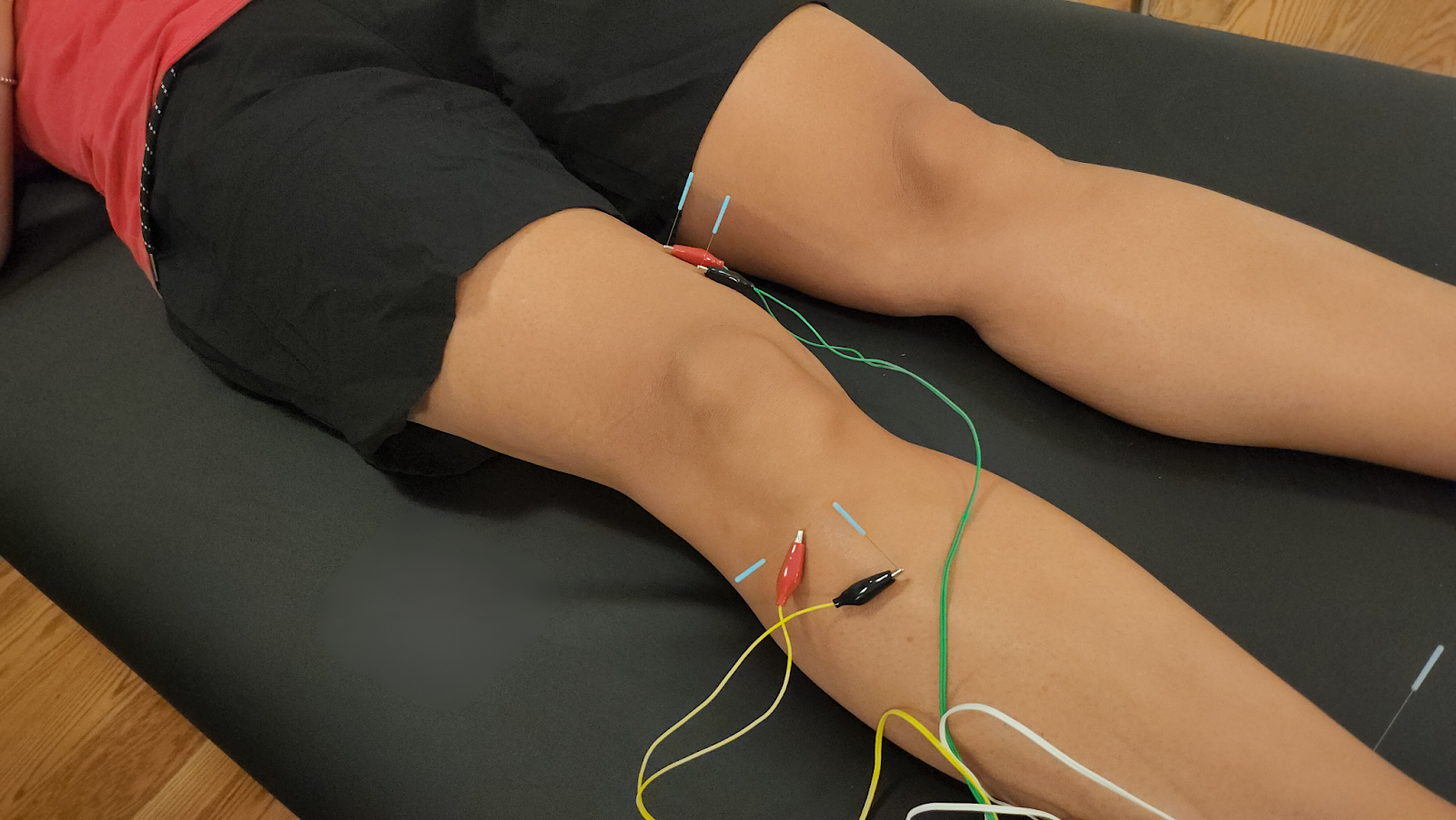
e-Dry Needling (e-DN): e-Dry Needling targets muscle trigger points to release deep tension. Adding electrical stimulation (e-DN) accelerates the process, enhancing muscle activation and improving recovery far more effectively than foam rolling alone.
These regenerative therapies don't just treat symptoms; they address the root cause and offer lasting relief while optimizing muscle function for better performance.
For a deeper look at how we treat IT band pain clinically, including our full approach with dry needling and shockwave, see Beat IT Band Pain: A Runner's Solution.
Why Our Approach Beats Foam Rolling Alone

At Next Level Physio, we go beyond temporary fixes. Our Move.Excel.Inspire (MEI) Method focuses on root causes rather than just symptoms, creating a personalized roadmap to lasting recovery.
Root Cause vs. Symptoms
We look at two essential factors in your diagnosis:
- The symptoms you’re experiencing
- The underlying cause behind them
By addressing the root cause, we ensure your pain relief is long-lasting, not just a quick fix.
The Bottom Line
If you're struggling with IT band pain, foam rolling alone won't cut it. Real solutions require strength training, proper technique, and advanced therapies like Shockwave, BFR, and e-Dry Needling. These treatments tackle the problem at its source and boost overall performance, allowing you to run faster, longer, and pain-free.
Ready for lasting results? Contact us at Next Level Physio to book your Free Runner's Assessment. Let's work together to keep you running strong and pain-free this season!
References
Pagaduan, J. C., Chang, S.-Y., & Chang, N.-J. (2022). Chronic effects of foam rolling on flexibility and performance: A systematic review of randomized controlled trials. International Journal of Environmental Research and Public Health, 19(7), 4315. https://doi.org/10.3390/ijerph19074315

