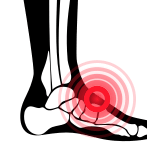
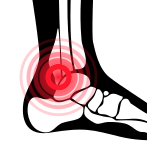
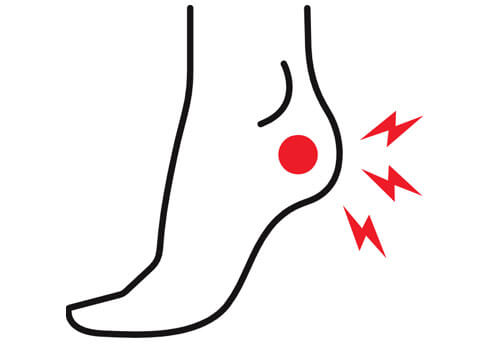
Foot and ankle pain gets dismissed more than almost any other injury in the body. It is easy to blame worn-out shoes, an old pair of orthotics, or just getting older. Meanwhile the heel pain that is sharp for the first ten steps every morning, the Achilles tightness that never fully goes away, or the ankle that keeps rolling on uneven ground are all treated as background noise instead of what they actually are: a system that has lost the capacity to handle what you are asking of it.

The foot and ankle absorb enormous, repetitive load every single day, and even more when you run, lift, or play sport. When the muscles and tendons responsible for managing that load are not strong enough or not working the way they should, pain shows up as the warning sign. Ignoring that warning, or just stretching around it, rarely makes it go away for good.

At Next Level Physio, ankle and foot pain treatment starts with identifying exactly what is failing to keep up with your training, not just where you feel it. From there we build a plan around your specific sport, your specific movement patterns, and what it will take to get you back to full capacity.


Foot or ankle pain limiting your training?

Book an Ankle & Foot Pain Evaluation at nlphysio.com  |  Woodcliff Lake, NJ  |  Montclair, NJ


Your Pain Has a Schedule, and That Schedule Is a Clue

Where your pain sits matters. When it shows up often matters more, and it is the part most people skip right past when they are describing their symptoms to us.

  • Sharp for the first ten steps, then it eases. This usually points to a tendon or a piece of fascia that stiffened overnight and is now being asked to move before it is warmed up. It is the classic signature of Achilles tendinopathy and plantar fasciitis, and it means the tissue has lost some of its normal give.
  • Fine at the start of a run, foot pain when running gets worse by the end. This is usually a strength or endurance problem in the muscles supporting the joint, not a problem with the joint itself. The stabilizers fatigue before the run does, and whatever they were controlling starts to break down once they clock out.
  • Pain that shows up hours after activity, not during it. A sign that training volume is outpacing recovery. The stress happened during the session. You just do not feel the bill until later that night or the next morning.
  • Fine until fatigue or a bad step exposes it.  Instability has a timing pattern too, just a different one. It tends to show up late in a run, late in a game, or on uneven ground, when the ankle's ability to sense and react gets tested. That is not the same as a muscle simply running out of gas. It is usually an old sprain that healed on the surface without the joint ever fully relearning how to protect itself.

None of these patterns belong exclusively to one diagnosis, and plenty of people have more than one running at the same time. But paying attention to when and how it hurts, not just where, is often the fastest way to narrow down what is actually happening before you ever set foot in our clinic.

Why New Shoes Never Actually Fix It

Foot pain is the one injury almost everyone tries to shop their way out of first. New running shoes. A different orthotic. An insert recommended by a friend or a running store employee. Sometimes it helps a little for a while. It rarely fixes anything.

Shoes and orthotics can change how load is distributed for a stretch. What they cannot do is build the strength or control your foot and ankle are actually missing. A calf that fatigues at mile four is still going to fatigue at mile four in an expensive new pair of shoes. An ankle that never relearned how to sense uneven ground after an old sprain does not relearn that skill from an insert.

What is actually driving most foot and ankle pain that a shoe swap cannot touch:

  • Calf and intrinsic foot weakness. The small stabilizing muscles of the foot and the calf complex control how force is absorbed with every step. When they are not strong enough, the plantar fascia, the Achilles tendon, and the ankle ligaments end up absorbing load they were never built to manage alone.
  • A stability gap that never got rebuilt. Enough range of motion without enough control to manage it under load is a common driver of ankle instability, and it is invisible on a shoe rack.
  • Compensation traveling down from the knee or hip. A hip that is not controlling femoral rotation well, or a knee that is not tracking properly, can quietly overload the foot and ankle with every stride, without any pain being felt anywhere except at the bottom of the chain.
  • Training load that has outpaced current tolerance. A rapid jump in mileage, a new surface, or a sudden increase in frequency can all ask more of your tissue than it is currently prepared to give.

What we tell almost every new patient

If a shoe or an orthotic were going to fix this, it already would have. The upgrade that actually works is in the tissue, not the footwear


The Six Conditions We See Most, and What's Actually Driving Them

These are the presentations that walk through our doors most often. The difference is we do not treat based on the label. We find out what is actually driving it, then build the plan around that, not around the name on the diagnosis.

Achilles Tendinopathy

Pain and stiffness in the tendon connecting the calf to the heel, classically worse with the first steps in the morning, easing once warmed up, then tightening again afterward. Despite how it is usually described, this is a tendon capacity problem, not inflammation, and it needs progressive load to rebuild, not rest to calm down.

  • Who feels this most: Runners increasing mileage or adding hill and speed work, weekend athletes returning after time off, and anyone with Achilles pain after running that is worse first thing the next morning
  •  What's usually driving it: Calf strength and flexibility deficits, training load spikes, and footwear or surface changes, in a combination that is different for every runner

Plantar Fasciitis

Heel and arch pain from irritation of the fascia along the bottom of the foot, classically that sharp first step out of bed, easing with movement, then tightening again after standing. Heel pain when running fits the same pattern. The fascia rarely acts alone: calf tightness and weak intrinsic foot muscles usually load it from above, which is why stretching it directly tends to bring only temporary relief.

  • Shows up most often in: Runners training for races, people who recently increased time on their feet, and anyone with a sudden change in footwear or surface
  • Why stretching alone rarely fixes it: The fascia and surrounding tissue need graded loading, not just flexibility work, to build lasting tolerance. We build specific plantar fasciitis exercise progressions around that principle rather than a generic stretching handout.

Ankle Sprains and Instability

Nobody tells you to walk off a herniated disc, but roll an ankle on a curb or coming down off a rebound, and the advice is almost always the same: walk it off, tape it up, you will be fine in a few days. Sometimes that is true. Often, it is not. The ligament heals, the swelling goes down, and everyone moves on before the ankle relearns how to sense uneven ground and react fast enough to prevent the next one. That is why instability is so often a repeat problem rather than a single event: the second sprain is easier to get than the first, and each one chips away a little more at the ligament's ability to do its job.

  • Most often seen in: Court and field sport athletes, trail runners, and anyone with a history of sprains that were never followed by a structured strengthening program
  • What actually breaks the cycle: Rebuilding proprioception and lateral ankle strength on purpose, not just waiting out the current sprain and hoping the next one does not happen

Posterior Tibial Tendon Dysfunction

The posterior tibial tendon supports the arch of the foot, and when it is overloaded, the arch can gradually flatten, producing pain along the inside of the ankle that worsens with standing or walking. It develops quietly, often mistaken for ordinary foot fatigue until the arch collapse becomes visible. Caught early, it responds well to strengthening. Left alone, it becomes much harder to reverse.

  • Often mistaken for: Ordinary foot fatigue or normal aging, rather than a specific tendon dysfunction with an actual treatment path
  • Why timing matters here specifically: This is a condition where catching it early meaningfully changes the long-term outcome, more so than almost anything else on this page

Stress Fractures

A stress fracture is a small crack in bone from repetitive load outpacing the bone's ability to keep up, most common in the metatarsals of the foot. This is the one condition here where too much too soon, not too little strength, is usually the real driver. The pain sits at one specific point, builds with activity, and unlike most of the conditions above, does not ease once you warm up. That is worth taking seriously rather than pushing through.

  • Most likely if: You have increased mileage or intensity quickly, returned from a break and ramped volume too fast, or have a history of low bone density or significant caloric deficit
  • What matters for treatment: This is one of the few conditions here where reducing load early is genuinely appropriate, followed by a carefully progressive return rather than a rush back to full mileage

Morton's Neuroma

Morton's neuroma is a thickening of tissue around a nerve, most commonly between the third and fourth toes, producing burning, tingling, or a sensation like standing on a pebble. Tight footwear aggravates it, so wider shoes genuinely help more here than almost anywhere else on this page, but they rarely solve it alone. The forefoot loading pattern that concentrated the pressure in the first place usually needs to be addressed directly.

  • Common in: People in narrow or tight toe-box footwear, runners with a forefoot strike pattern, and anyone who spends long hours on their feet in restrictive shoes
  • What actually helps beyond new shoes: Addressing the loading pattern that concentrates pressure in that area, not just switching to a wider shoe and stopping there

“I've been suffering from chronic pain in my ankle for a few years now, which has really affected my mobility and activity level. I was really getting frustrated going from chiropractors, acupuncturists, and other PT places around town and just not getting anywhere with the treatments. After my first treatment, I felt a huge noticeable difference in my pain. Since then, with every session, my ankle just feels better and gets stronger.“

— Yu Ling W.  |  Google Review, Local Guide  |  Chronic ankle pain resolved after years of trying other approaches


Rest Doesn't Work When You're Reloading Fifteen Hundred Times a Mile

Here is the math that makes rest such a poor long-term strategy for this part of the body: your foot contacts the ground somewhere around 1,500 times over a single mile. Multiply that by a week of training and the number gets enormous fast. A tendon or a piece of fascia that has lost its tolerance for that volume of repetition does not get it back by avoiding it. It gets it back by being reintroduced to load, gradually and on purpose.

When you stop loading the calf, the plantar fascia, or the ankle stabilizers, their ability to handle that demand drops. The training load that was manageable before you rested can become provocative again, not because anything structurally worsened, but because the system lost the conditioning it needs to keep up.

This is especially clear with Achilles tendinopathy and plantar fasciitis. Both tissues need graded mechanical loading to remodel and strengthen. Rest quiets the pain signal for a while. It does not rebuild what is missing. Go back to running or training without addressing that shortfall, and the same pain reliably comes back for another round.

What rest actually does: Reduces acute irritation and gives an angry nervous system a short window to settle

What it leaves undone: Rebuilding calf or foot strength, restoring tendon or fascia resilience, correcting movement mechanics, or addressing whatever is happening upstream at the knee or hip.


The short version

Progressive loading rebuilds what rest cannot. Structured strength and balance training is what actually reduces recurrent ankle sprains. Passive treatment and prolonged rest buy short-term quiet, not a lasting fix.


What We're Actually Watching When You Walk Through the Door

Most foot evaluations involve someone pressing on the sore spot and asking you to rate the pain on a scale of one to ten. Ours starts with watching you move, because the sore spot is never the whole story.

Movement Screening

We watch how you walk, run, and move through single-leg loading and balance tasks. Where does the ankle sit during those movements? Is there excess pronation, an unstable landing, or a compensation pattern that never shows up in a seated exam but becomes obvious once you are moving under load?

Calf Strength Testing

Calf strength, particularly single-leg heel raise capacity, is one of the most consistent and most overlooked findings in Achilles and plantar fascia presentations. We test it directly, since a standard exam frequently misses meaningful side-to-side deficits.

Running Gait Analysis

For runners, we incorporate a running gait analysis to evaluate cadence, foot strike pattern, and loading rate across the gait cycle. Foot and ankle pain that shows up at a predictable point in a run often has a mechanical explanation that only becomes visible in motion.

Load Tolerance Assessment

We want to know what you are training for and what that specifically demands of your foot and ankle. From there we identify exactly where your current tolerance falls short of that demand, and we close it systematically with a plan built around your training, not a generic timeline.

Getting You From Pain-Free Standing to Full Mileage

Pain-free standing in a clinic and pain-free running eight miles are two completely different achievements, and a lot of foot and ankle treatment stops at the first one. We are only interested in the second.

Every plan runs through the same three phases we use across the clinic, Move, Excel, Inspire, but what each phase actually looks like is built around your specific foot and ankle, not applied as a script:

  •  Move. Restoring pain-free mobility through the ankle and foot and resetting the movement patterns that developed around the injury, the limp you did not realize you still had, the way you have been avoiding pushing off that side.
  • Excel. Progressive loading of the specific tissue involved, Achilles or plantar fascia most often, alongside calf and intrinsic foot strengthening and balance work for anyone dealing with instability. This is where capacity actually gets rebuilt, not just where pain gets managed.
  • Inspire. Return-to-running and return-to-sport benchmarks built around your specific training demands, not a generic timeline or a subjective pain scale. This phase is what separates a foot that tolerates daily life from one that is ready for real mileage.

The tools we bring in support those three phases, matched to your specific presentation, not applied as a default package:

  • Therapeutic Exercise |  The progressive strength foundation of every foot and ankle rehab program
  • Shockwave Therapy |  Used for chronic Achilles tendinopathy and plantar fasciitis presentations

Skip the Mistake Most People Make First

Condition Where You Feel It The Mistake Most People Make Learn More
Achilles Tendinopathy Back of the heel and lower calf Stretching it aggressively often irritates it further Achilles Tendinopathy
Plantar Fasciitis Bottom of the heel and arch New orthotics alone rarely resolve it Plantar Fasciitis
Ankle Sprains & Instability Outside of the ankle Taping it and returning to play skips the real rehab Ankle Instability 
Posterior Tibial Tendon Dysfunction Inside of the ankle and foot Waiting for a visible arch change before addressing it PTTD 
Stress Fractures One specific point on the foot or lower leg Running through it turns weeks off into months off Stress Fractures 
Morton's Neuroma Between the third and fourth toes Wider shoes help, but rarely solve it alone Morton's Neuroma 

“I came to Next Level Physio after developing plantar fasciitis. I was training for a half marathon when suddenly this nagging heel pain would not go away. Medications, orthotics, and stretching did not help much. We did shockwave therapy, dry needling, and cupping. They also examined my gait and running form and were quick to point out muscle imbalances that may be triggering my heel pain. After several sessions I saw a huge improvement and was ultimately able to return to running.“

— Jackie V.  |  Google Review  |  Return to half marathon training after plantar fasciitis


Woman With Ankle Pain

Every Step Should Move You Forward, Not Remind You Something Is Wrong

If your foot or ankle pain has been sticking around despite rest, new shoes, or stretching it out every morning, that is not a sign that this is just how your foot is now. It is a sign that whatever is actually driving thousands of painful steps a day has not been identified yet.

An evaluation at Next Level Physio gives you a real answer: what is actually happening in your foot and ankle, what your knee or hip may be contributing to the picture, and exactly what it will take to get back to full training without wondering when the next flare is coming.

We work with runners, lifters, and active adults across New Jersey who are done managing foot and ankle pain one step at a time. They want it solved.


Book an Ankle & Foot Pain Evaluation

Woodcliff Lake, NJ  |  Montclair, NJ nlphysio.com/request-consultation/